
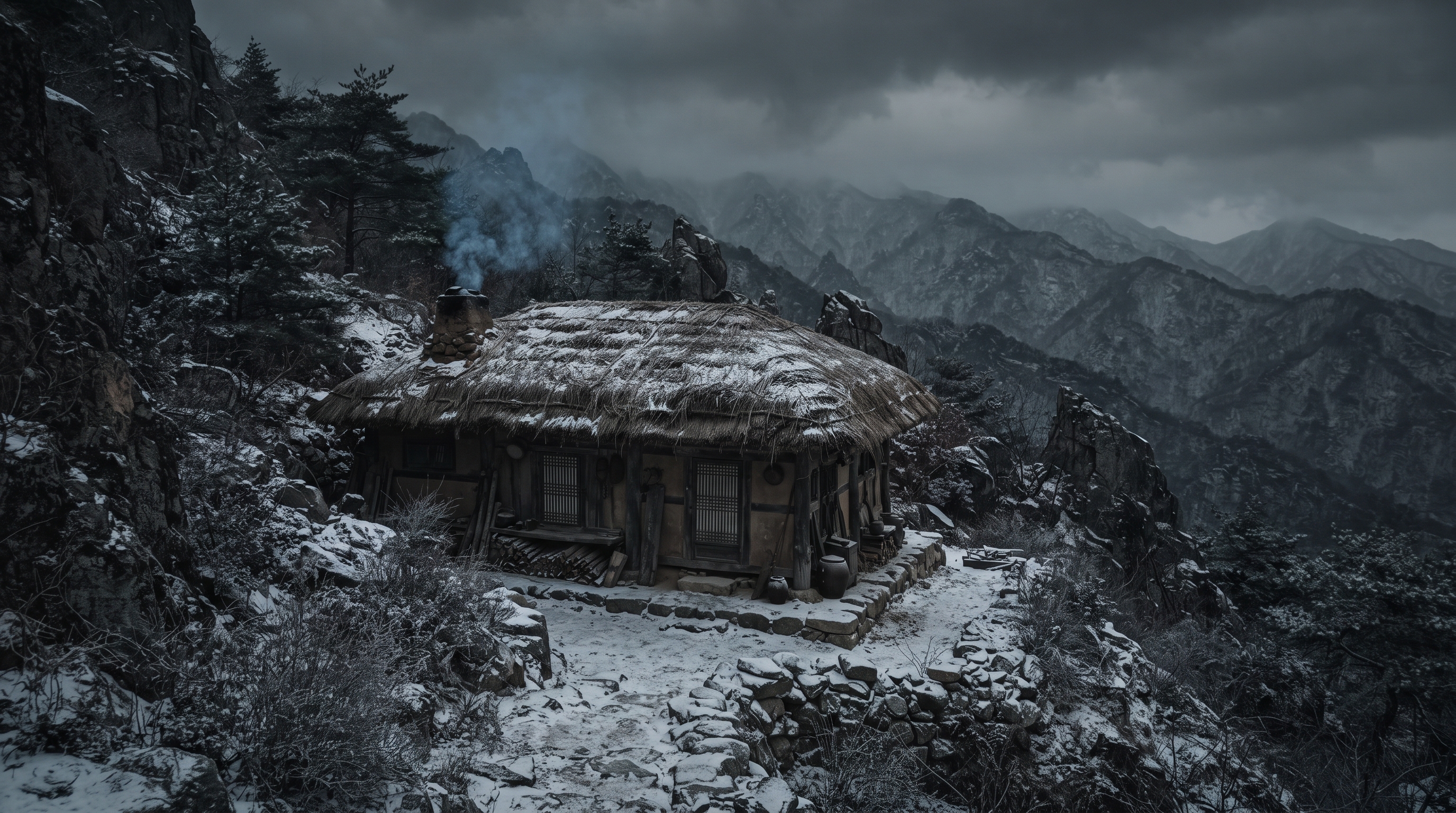
When producing a Korean R&B Soul Ballad, modern audio engineers must understand that the most powerful instrument in the mix is often silence. In a digital era obsessed with maximum volume and relentless high-tempo drops, choosing to slow down to a breathing pace of 68 Beats Per Minute is an act of profound artistic defiance.
Our latest production takes Hanobaeknyeon (500 Years)—one of Korea’s most historically devastating folk songs about grief and the relentless passage of time—and completely re-engineers its acoustic DNA. We stripped away the traditional upbeat percussion and wailing vocal bends, leaving only the bare, bleeding emotional core.
The track opens with the lingering resonance of a cello, followed by a brief, heavy silence. Then, a low, thick Haegeum (Korean traditional string instrument) cuts through the quiet, accompanied by a smoky, slightly cracked female voice whispering: “In the end, the boat never returned.” With that single, devastating line, the listener is pulled into the intimate, emotionally crushing atmosphere of a modern Korean R&B Soul Ballad masterpiece.
The Architecture of a Korean R&B Soul Ballad at 68 BPM
To convey the deep sorrow of the original lyrics without falling into the trap of melodramatic despair, the arrangement had to be obsessively minimalist. At a slow 68 BPM, every single note carries immense weight. The foundation is built on a minimalist piano and a low cello, leaving vast amounts of space and silence between the notes.
The vocal production strictly avoids the dramatic vocal bends typical of traditional Korean Trot music. Instead, we utilized a husky, breathy female vocal with modern R&B phrasing. She delivers the lyrics not with screaming despair, but with a quiet, restrained dignity. When she sings, “Tears fall as you leave your heart behind and only your body departs,” the restrained tearful ad-libs make the sorrow feel unbearably intimate.

Weaving the Haegeum into Modern Korean R&B Soul Ballad Harmonies
The most critical audio engineering decision in this Korean R&B Soul Ballad was how to handle the traditional instruments. In most world-music fusions, traditional instruments are simply layered on top of an electronic beat, playing an independent folk melody. We completely rejected that approach.
Instead, the melodic phrasing of the Haegeum is fully integrated into the R&B harmonic structure. It does not play over the track; it is woven directly into the same chord progression as the minimalist piano and ambient string pads. The traditional instrument breathes and moves exactly with the modern electronic elements, creating a cohesive atmosphere where every instrument breathes as one single organism.
The bridge of the song encapsulates the philosophy of the track: “We do not forget those who left / We live today through that love.” This is the essence of Korean Han (unresolved sorrow) meeting Western Soul. It is an acknowledgment that life goes on, even in the face of profound loss.
Put on your headphones, close your eyes, and listen to the silence between the notes. Let the smoky vocals and the deep resonance of this Korean R&B Soul Ballad remind you that there is a quiet, beautiful dignity in surviving another day. https://hansori-kr.com/140bpm-k-pop-edm-trap-ongheya/
💡 Frequently Asked Questions (FAQ)
Q: What defines a “Korean R&B Soul Ballad” in this context?
A: A Korean R&B Soul Ballad is a deeply emotional sub-genre that merges the minimalist, groove-driven instrumentation of modern Western R&B with the historical, unresolved sorrow (known as Han) of traditional Korean music. Instead of relying on heavy drops or massive orchestrations, it uses silence, space, and organic acoustic textures—like the cello and Haegeum—to create an intimate, emotionally raw soundscape.
Q: Why do people find healing in listening to dark, sad, or slow melancholic music?
A: Psychologically, listening to a slow 68 BPM melancholic ballad allows listeners to process their own unresolved grief in a safe, controlled aesthetic environment. A tempo of 68 Beats Per Minute closely mirrors a resting human heart rate, grounding the listener. Instead of forced positivity, these heavy, breathing soundscapes provide validation of shared human sorrow, leading to a profound emotional catharsis and quiet dignity rather than overwhelming despair.
🩸 Conclusion: A Sanctuary of Quiet Dignity
The deeply minimalist and sorrowful nature of this Korean R&B Soul Ballad makes it the perfect sonic backdrop for late-night introspection, healing, or simply finding peace after a devastating personal loss.
When the weight of the world feels too heavy, do not try to mask your grief with superficial noise, forced upbeat melodies, or distractions. True healing begins with acceptance. Let the vast silence of the arrangement, the weeping resonance of the Haegeum, and the 500-year-old sorrow of Hanobaeknyeon wrap around you.
Remember the whispering monologue that opens the track: “In the end, the boat never returned.”
Put on your headphones, close your eyes, and listen to the silence between the notes. Experience the quiet dignity of true emotional release, and find the strength to survive another day.
👉 Step into the silence and experience the breathtaking fusion of R&B and traditional sorrow. Listen to the full track on our Official YouTube Channel: https://youtube.com/@hansori_kr?si=g-cBM9I_9JT5P6Cy
댓글 남기기